
Maiduguri, the capital of Borno State, has experienced years of insecurity, displacement and economic disruption caused by the Boko Haram insurgency. Families, schools, businesses and healthcare facilities have all borne the cost. Yet, the city’s story is also one of resilience and determination, as its people have refused to give up. Maiduguri’s story is not defined by hardship alone; it is also a story of people who have refused to surrender their hope and a continuing effort to rebuild communities and restore livelihoods.
When Professor Babagana Umara Zulum was sworn in as governor on 29 May 2019, he inherited a state still reeling from the effects of conflict. Since then, his administration has focused on rebuilding homes, reopening schools, reviving healthcare services and repairing the roads that connect communities.Maiduguri has long served as a home for people displaced by the conflict. The state’s reconstruction ministry is responsible for rebuilding homes, schools, markets and healthcare facilities, as well as helping displaced families return to their communities. Sustainable resettlement, however, requires more than providing housing; it also involves ensuring access to farms, markets, essential services and security.
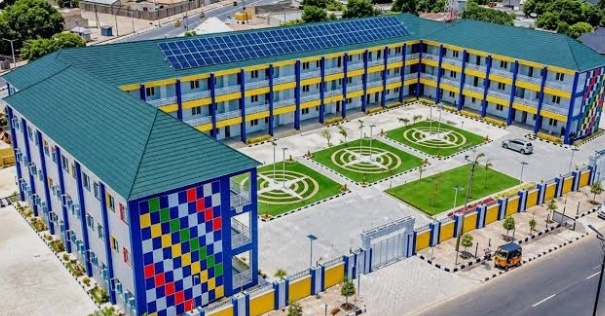
The administration has also identified youth empowerment, agricultural development and job creation among its priorities.Years of insurgency disrupted education across Borno State, leaving many children without access to stable learning environments. Consequently, rebuilding the education sector has become an important part of the state’s recovery process.In December 2025, Kulogumna Mega Primary School and Government Day Secondary School, Kaleri, were commissioned with 48 and 60 classrooms, respectively, alongside laboratories, libraries and sports facilities.Three additional school projects were commissioned in March 2026, including Government Secondary School, Maimusari; Maimusari Mega Primary School; and Command Secondary School, Maiduguri. Other educational developments across the state include a n nursing college in Gwoza, and a College of Health Science and Technology in Bama Local Government Area, alongside the construction and rehabilitation of other primary and secondary schools across Borno State.
Nevertheless, the success of these investments will be measured not only by the number of classrooms constructed but also by the quality of teaching, the availability of learning materials, students’ attendance and the ability to keep vulnerable children in school.Such investments are important because education gives children the opportunity to acquire knowledge, develop skills and build a future beyond the challenges of conflict.For a city like Maiduguri, where many families have experienced displacement and economic hardship, access to education can contribute to social recovery and long-term development. A rebuilt school represents more than a physical structure; it represents an opportunity for a new generation to reclaim its future.


Leave a Reply