
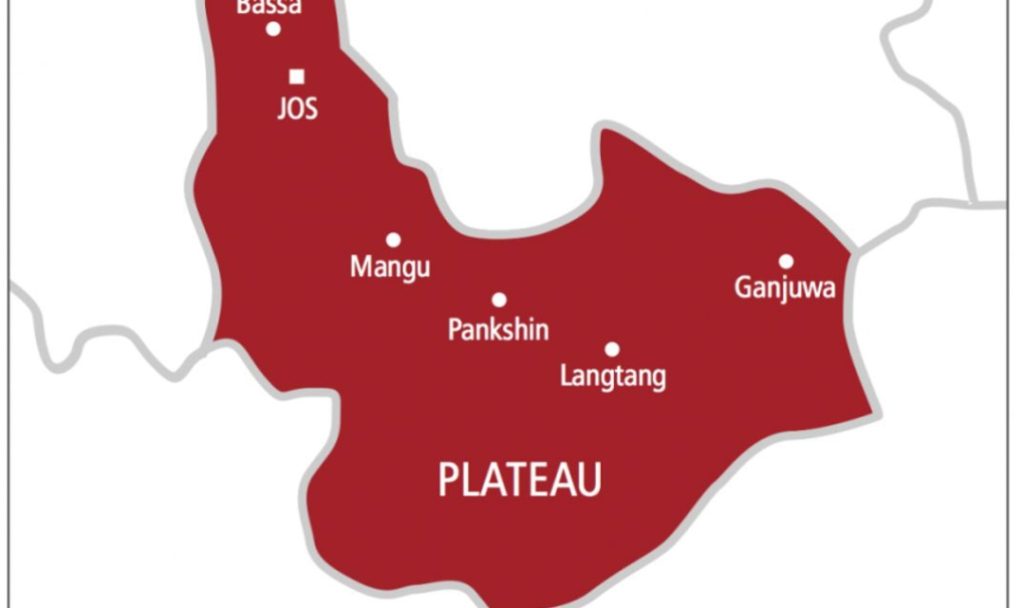
Residents of several underserved communities in Plateau State are experiencing improved living conditions following the deployment of solar-hybrid mini-grids by V-Solaris Limited, with electricity access supporting education, healthcare, agriculture and small businesses.The projects are reducing residents’ dependence on candles, kerosene lamps and petrol-powered generators, providing more reliable electricity for households and local enterprises.In Dadin Kawa, the traditional ruler, Nanzun Loknan Francis, said the intervention had transformed daily life after years of unreliable access to electricity.
“Everybody has gotten television and fans. We are in light now,” he added.Students have also benefited from the improved electricity supply. Nathan Bali, a student in the community, said studying had become easier since he no longer had to depend on a torch to read.“Before we had light, I was using a torch to read, and it was giving me problems,” he said. “I read with ease, and I’m happy because there is light.”
Similarly, the traditional ruler of Mile 4, Chief Bulus Vincent, said the electricity supply had eased residents’ difficulties and enabled children to participate in evening study sessions.
Electricity improves healthcare delivery
Healthcare facilities in the benefiting communities are also experiencing improved working conditions.Dr Langes Bitrus of Moekat Community said the mini-grid supplied electricity for medical equipment, including microscopes and other machines that require a reliable power source.The improved electricity supply is expected to support healthcare workers in carrying out essential medical procedures and providing services to residents.
Small businesses record improvements
Local traders and business owners have also reported benefits from the solar-powered electricity systems, particularly through reduced dependence on fuel and generators.Sati Mangut, chairman of Daffo Community, said business owners previously faced high generator costs and frequent fuel shortages.He described the situation as “difficult and cumbersome” before the mini-grid was introduced, adding that “the power supply is always steady” under the new arrangement.In Fajul, businessman Renan Ezra said generator breakdowns and fuel shortages had previously disrupted his operations. He noted that access to solar electricity had improved productivity and profitability.Another resident of Dadin Kawa, Mankoi Gingon, has acquired a hand dryer for his business and is considering purchasing additional equipment to expand his operations.The developments highlight the potential of reliable electricity to help rural entrepreneurs improve their services, increase productivity and expand their businesses.
Solar power offers opportunities for agriculture
Beyond households and businesses, the projects could support agricultural production and processing across rural communities.Engr Danjuma Henry Kassam, a technical system design engineer, said V-Solaris had developed a solar plant with an installed capacity of approximately 200 kilowatt-peak to supply electricity to the community.He explained that unreliable electricity had constrained irrigation, crop processing and the preservation of agricultural produce, including groundnuts, maize and rice.According to him, access to dependable electricity could enable farmers and processors to operate machinery, improve post-harvest handling and preserve produce more effectively.Such improvements could help reduce avoidable losses, strengthen rural economic activities and create additional opportunities for agricultural businesses.Kassam said the company had implemented projects across Langtang South, Shendam and parts of Bokkos, while preparations were ongoing for additional sites.
V-Solaris plans further mini-grid expansion
V-Solaris Limited has implemented seven mini-grid projects under Nigeria’s Electrification Project, delivering 5,517 electricity connections.The company also plans to develop up to 97 additional sites through an initiative backed by the International Finance Corporation (IFC).The proposed expansion is expected to provide approximately 15 megawatts of electricity capacity and potentially deliver about 142,343 connections across nine states.However, these figures represent projected targets rather than completed connections.Meanwhile, residents in other benefiting communities have reported improvements in everyday activities.In Faya, Nankpak Fazhi said access to electricity had eased difficulties associated with grinding services and charging mobile phones.Another resident, Langs Monday Jacob, said the improved power supply had contributed to local economic development.
Renewable energy and rural development
The Plateau projects highlight the role decentralised renewable energy systems can play in extending electricity access to communities underserved by conventional power infrastructure.Beyond providing household lighting, solar-hybrid mini-grids can support essential services, improve learning conditions, strengthen healthcare delivery and create opportunities for small businesses and agricultural enterprises.However, sustaining these benefits will depend on the reliability and maintenance of the systems, the affordability of electricity for residents and the expansion of productive uses of power.As Nigeria continues to address its electricity-access challenges, investments in decentralised renewable energy could offer a practical pathway to improving livelihoods and supporting economic development in rural communities.

Leave a Reply